Every major security vendor now has an AI story. Most of them follow the same pattern: take the existing SIEM, EDR, or XDR workflow, add a large language model as a co-pilot, and call it an AI SOC. The analyst still drives. The AI suggests. The queue still exists. It just moves a little faster. Autonomous Security Operations (ASO) is a fundamentally different architecture. One platform covers all seven stages of security operations with full autonomy. The human sets strategy and governs outcomes. The platform operates. Understanding the difference between these two approaches is the most important architectural decision security leaders will make this year.
Key takeaways:
- AI SOC products augment analysts with co-pilot features but still require a human to drive every decision and response action.
- Autonomous Security Operations (ASO) covers all seven stages of security operations in a single platform with full autonomy.
- The core difference is architectural: AI SOC bolts AI onto existing workflows, ASO rebuilds operations from the ground up around autonomous agents.
- Organizations adopting ASO report 90%+ reductions in mean time to respond and eliminate alert backlogs entirely.
What Is an AI SOC?
AI SOC is a broad label applied to products that embed AI capabilities, typically large language models, into existing security operations tools. CrowdStrike Charlotte AI, Microsoft Security Copilot, Google SecOps Gemini, and SentinelOne Purple AI are all examples. The pattern is consistent: the analyst asks the AI a question, the AI summarizes an incident, recommends a response, or accelerates a query. The analyst reviews the output and decides what to do.
AI SOC products are genuinely useful. They reduce investigation time, surface context analysts might miss, and help junior analysts perform closer to senior levels. But they share a fundamental constraint: the AI is a tool the analyst uses, not a system that operates independently. Every alert still requires a human to triage. Every response still requires a human to approve. The operational model hasn't changed. It's just faster.
What AI SOC products do well:
- Natural language querying of security telemetry and threat intelligence
- Incident summarization and investigation acceleration
- Recommended response actions with supporting context
- Reducing time-per-investigation for analysts already in the workflow
What AI SOC products do not do:
- Operate without an analyst present, every action requires human approval
- Cover the full security operations lifecycle, most focus on detection and triage only
- Eliminate alert backlogs, the queue still exists, it just moves faster
- Run autonomously at 3am when no analyst is watching
- Handle detection engineering, threat hunting, or recovery autonomously
What Is Autonomous Security Operations (ASO)?
ASO is a new category, not an improvement to an existing one. It is a single platform that covers all seven stages of security operations, detection engineering, alert triage, investigation, threat hunting, containment, remediation, and recovery, with full autonomy. The human sets the strategy: risk tolerance, priorities, escalation policies. The platform handles the driving.
Alaris is the first ASO platform. It is built around AI agents that autonomously detect, investigate, hunt, contain, and remediate threats across the full enterprise environment. These agents operate on a Security Graph that models every entity, relationship, and behavior in real time, giving them the contextual understanding of a senior analyst but at machine speed and scale.
The distinction from AI SOC is architectural. An AI SOC adds a co-pilot to an analyst's existing workflow. ASO replaces the workflow itself for the 95% of security operations work that is systematic, repeatable, and doesn't require human judgment. Analysts shift from operating the toolchain to governing outcomes.
ASO vs. AI SOC: A Direct Comparison
The Co-Pilot Problem
The co-pilot framing matters operationally. An analyst using an AI SOC product still needs to be present, engaged, and ready to act. They work faster, but the workflow fundamentally depends on them. At 2am when your most experienced analyst is asleep, the AI SOC co-pilot is waiting for someone to ask it a question. An ASO platform is actively investigating, hunting, and responding.
AI SOC products also inherit the limitations of whatever platform they sit on. Security Copilot is constrained by Sentinel's data model. Charlotte AI is constrained by Falcon's endpoint-first architecture. Purple AI is constrained by SentinelOne's telemetry scope. The AI can only be as good as the platform underneath it. ASO starts from a different premise: build the platform for autonomous agents first, then let the agents operate across the full environment.
The self-driving car analogy: AI SOC gives you lane assist and adaptive cruise control. ASO gives you full self-driving. Both use AI. Only one changes who needs to be behind the wheel.
When an AI SOC Product Makes Sense
AI SOC products are a reasonable choice in specific circumstances. If you have a large, mature SOC team and want to maximize their throughput without changing your operational model, an AI co-pilot delivers genuine value. If your regulatory environment requires tight human oversight of every response action, the human-in-the-loop model is a feature, not a limitation.
- You have a well-staffed SOC team and want to increase their productivity
- You require human approval on every response action for regulatory reasons
- You are deeply invested in a single vendor ecosystem and want to extend it
- Your primary goal is making existing analysts faster, not reducing analyst dependency
When ASO Is the Right Choice
ASO is purpose-built for organizations where the security operations gap is real and growing. Where the problem isn't that analysts are too slow, it's that there aren't enough analysts to cover the threat surface, or the alert volume exceeds what any team can realistically clear.
- Alert backlog exceeds what your team can realistically clear
- MTTR is measured in hours rather than minutes
- You cannot staff 24/7 coverage and need genuine around-the-clock autonomous protection
- You are running SIEM + SOAR + EDR as separate tools requiring separate analyst workflows
- Analyst burnout and retention is becoming a strategic risk
- You want your security team focused on strategy and governance, not queue management
“We evaluated three AI SOC products before looking at ASO. The co-pilots made our analysts faster, but we still needed the same number of people on the same rotation. ASO changed the equation entirely. The analysts we have now spend their time on detection engineering and threat intelligence, not alert triage.”
Head of Security Operations, Enterprise Financial Services
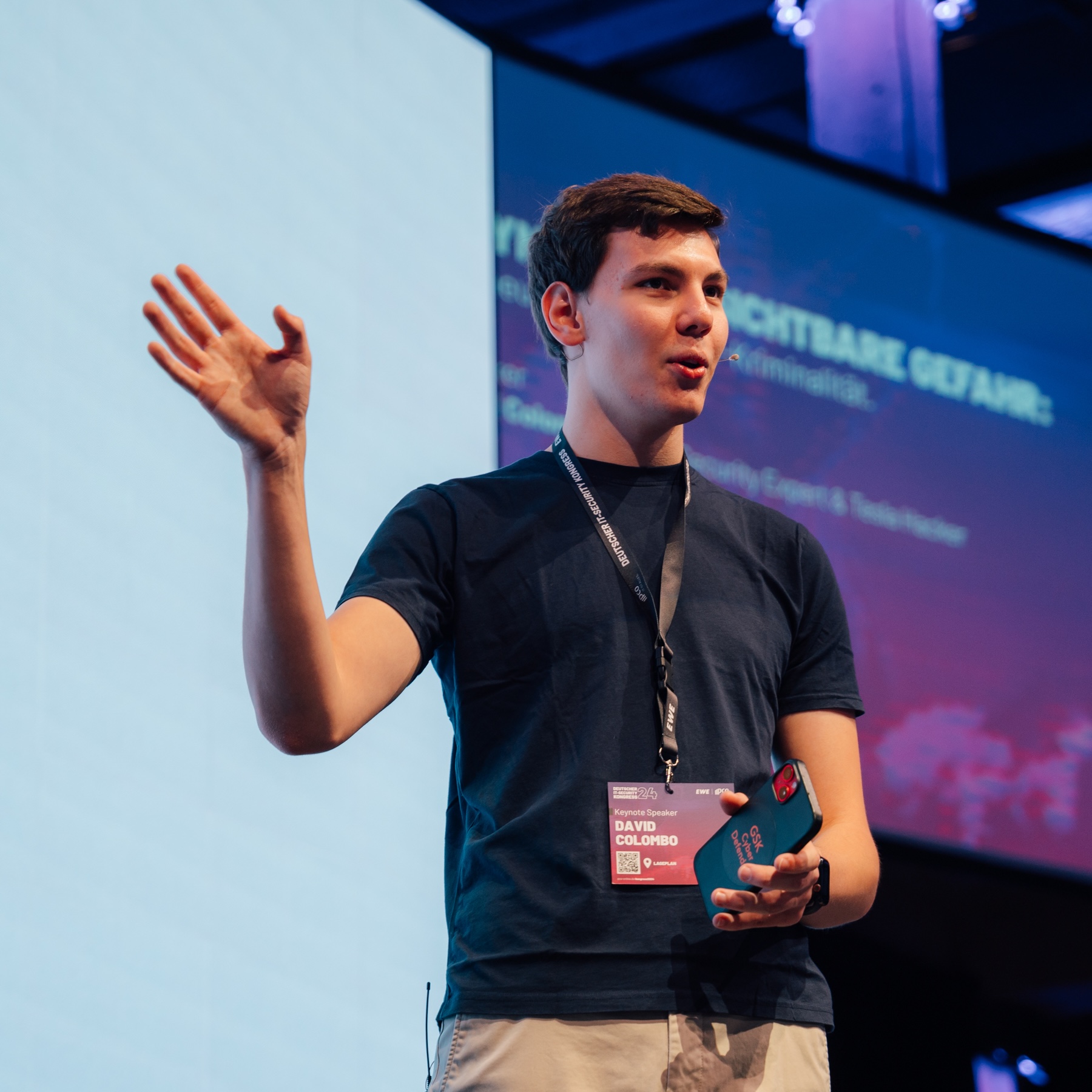
David Colombo
Founder & CEO, Alaris
Globally recognized security researcher and advisor by 19. Advised major tech companies and European defense programs. As featured in Bloomberg, Forbes, and Reuters.